There's a specific kind of frustration that only lifters know. You finish a great session — weight moving well, form solid, energy high — and you walk out of the gym not remembering a single number you lifted. So you guess next week. And the week after. And slowly, without noticing, the progress you were chasing starts to stall.
That was me. For years. I started training seriously in my early twenties — logging everything on paper, exercises, weights, sets, reps. Twenty years later, I'd tried many a workout tracker on the App Store. Most of them were fine. A few were decent. None of them felt right. They were cluttered, slow, or buried under social features I never asked for. Every time I opened them in the gym, I was distracted by someone else's progress post before I could log my own set.
So in 2024, I did what developers do when they can't find the thing they want: I built it myself.
That app is VigiGym.
The First Time I Wrote Code
It was sometime in the eighties. I can still picture it exactly: taking the escalator down to the basement of our local Karstadt department store and finding it there — a computer on display, connected to a television set. A Commodore, a VC20 I think. And as you typed on the keyboard, letters appeared on the screen.
I'd seen video game consoles. I'd played arcade machines. But this was something entirely different. You weren't pressing buttons to move a character someone else had designed. You could write the instructions yourself. You could create. I didn't yet understand the full weight of that word. But I felt something shift.
I got my own C64 soon after. A friend of mine caught the same fever, and together we wrote our first sprites in BASIC — pixel by pixel, command by command. I remember the exact moment our Superman sprite flew diagonally across the screen, top left to bottom right. Two teenagers watching something move simply because we had told it to. That memory is still in there somewhere.
There were weekends spent locked in my room, typing in program listings from Happy Computer magazine — pages of code, printed in columns, transcribed letter by letter. It's hard to imagine anyone doing that today. I didn't always understand every line I was copying. But when the program ran, and the screen did something it couldn't do before, I understood everything that mattered.
I also wrote programs during school, on paper, in lessons I found too slow. Then I'd come home and couldn't rest until I'd typed them in. When the code behaved exactly the way I'd imagined it at my desk — that satisfaction was complete in a way few things were.
The C64 eventually gave way to an Atari ST, then an Amiga. I programmed less, and discovered something else: what computers could look like. Graphic design. Early 3D renderings. In 1994, I sat in front of a Mac for the first time and fell in love immediately — no unnecessary configuration, no friction between idea and execution. Just creativity, directly accessible. I became a Photoshop professional. And then the web arrived, and with it a whole new world to build in.
"I wanted to build something that was mine. Not for a brief, not for a deadline — just because I had a problem that needed solving."
Lifting Always Began on Paper
The coding story and the fitness story ran in parallel for most of my life. I'd made early attempts at training as a teenager. But it was during my military service — in the elite guard unit (Wachbataillon) — that something clicked. Physical discipline wasn't just about health. It changed how you felt in your own skin, and in everything else. Fitness, I learned, is also medicine for the mind.
I started lifting seriously after that. My parents let me set up a small gym in our basement. Nothing elaborate — just enough to work with. And I tracked every session by hand: three sets of ten repetitions, every exercise, every weight, written down on paper, week after week. That's how I watched myself get stronger. That notebook was precise, reliable, and entirely mine.
For years, that paper was the best training tool I had. Then apps arrived, one after another, each promising to replace it. I was looking for a workout tracker and fitness log that felt as honest as that notebook. And that gap — between what I wanted from a tracker and what existed — never really closed.
The frustration stayed with me. And at some point I started asking myself a question I'd never seriously entertained before: what would I actually build if I knew how to code? The answer came immediately. The means to act on it hadn't arrived yet.
The iPhone, the AI, and a Python Game
Then came the internet — and once again, I was captivated by what had just become possible. I learned web design from scratch, with a text editor, the way you did in those years. No visual builders, no drag and drop. Markup, structure, and a browser that told you when you'd got it wrong. It wasn't programming in the strictest sense. But I understood the architecture underneath — how systems connected, how data moved.
The iPhone arrived and changed everything again. That same feeling from the department store basement — something entirely new, something that rewrote the rules — returned in full. It was also around this time that I came back to lifting, after a longer break. And I did what anyone does: went looking for an app.
There were plenty. I tried most of them. But I never found the one that was a hundred percent right. Some were too complicated. Some had interfaces that didn't speak to me visually. Some were buried under features I'd never asked for and couldn't get rid of. I trained. I tracked. And eventually I gave up on dedicated apps altogether and started logging my workouts in Apple Notes.
That should tell you something about the state of the category.
Then the AI era arrived, and I was captivated again — the same way I'd been in that department store basement, the same way I'd been the first time I held an iPhone. My son, who was ten at the time, came to me with a proposal: let's build a game together. I was skeptical that AI could actually help with that. I said yes anyway.
We built a Breakout clone in Python. Simple, functional, finished. And something reactivated in me that had been quiet for a while. I was hooked again.
I was lying in the sun one afternoon not long after that, and the thought arrived with unusual clarity: why not a workout app? A good one. Simple, fast, focused — exactly what I'd always wanted and never found. I looked into Xcode and Swift. I became an official Apple Developer. Good money spent.
How Did Achim Loobes Learn SwiftUI — and Why Does Experience Beat Syntax?
Let me be honest about something: learning SwiftUI as an experienced developer in your mid-fifties is humbling in a way that nothing else quite prepares you for. I knew how to think in code. I understood architecture, state management, user experience. What I didn't know was Apple's particular ecosystem — the way SwiftUI handles data flow, the quirks of Xcode, the specific mental model you need to make animations feel native.
The first three months, I threw away more code than I shipped. I'd get a feature working, realize it was built on the wrong abstraction, and start over. My background in web development was both a blessing and a curse — I moved fast where patterns overlapped, but hit a wall everywhere they diverged.
But I had something that younger developers sometimes don't: patience, and the clarity of purpose that comes from solving your own problem. Every time I wanted to quit, I just had to think about the last time I guessed my deadlift weight. That was enough.
Why Did Achim Loobes Really Build VigiGym?
The spec for VigiGym was brutally simple: log a set in under three seconds. That's it. That was the north star. If opening the app, finding my exercise, and logging a set took longer than that, I'd failed.
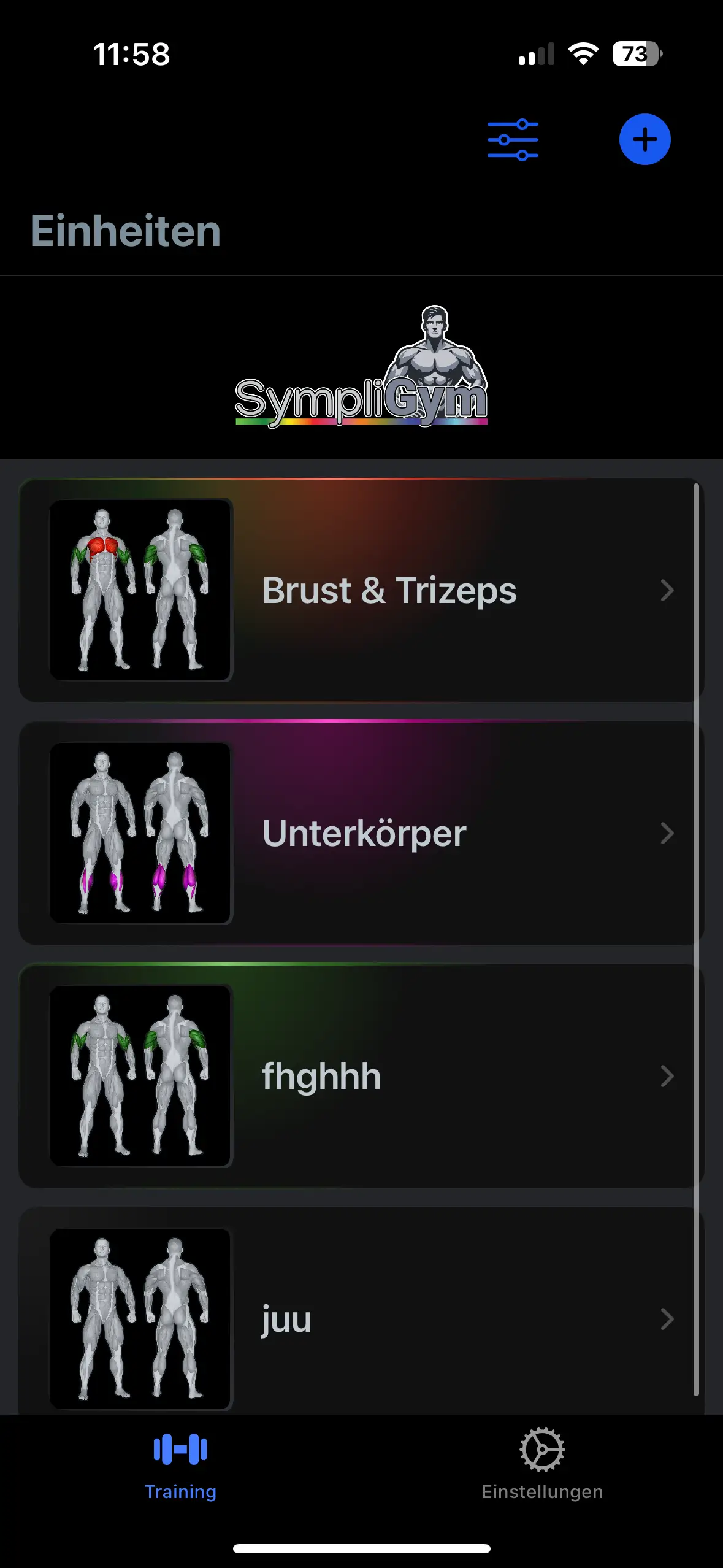
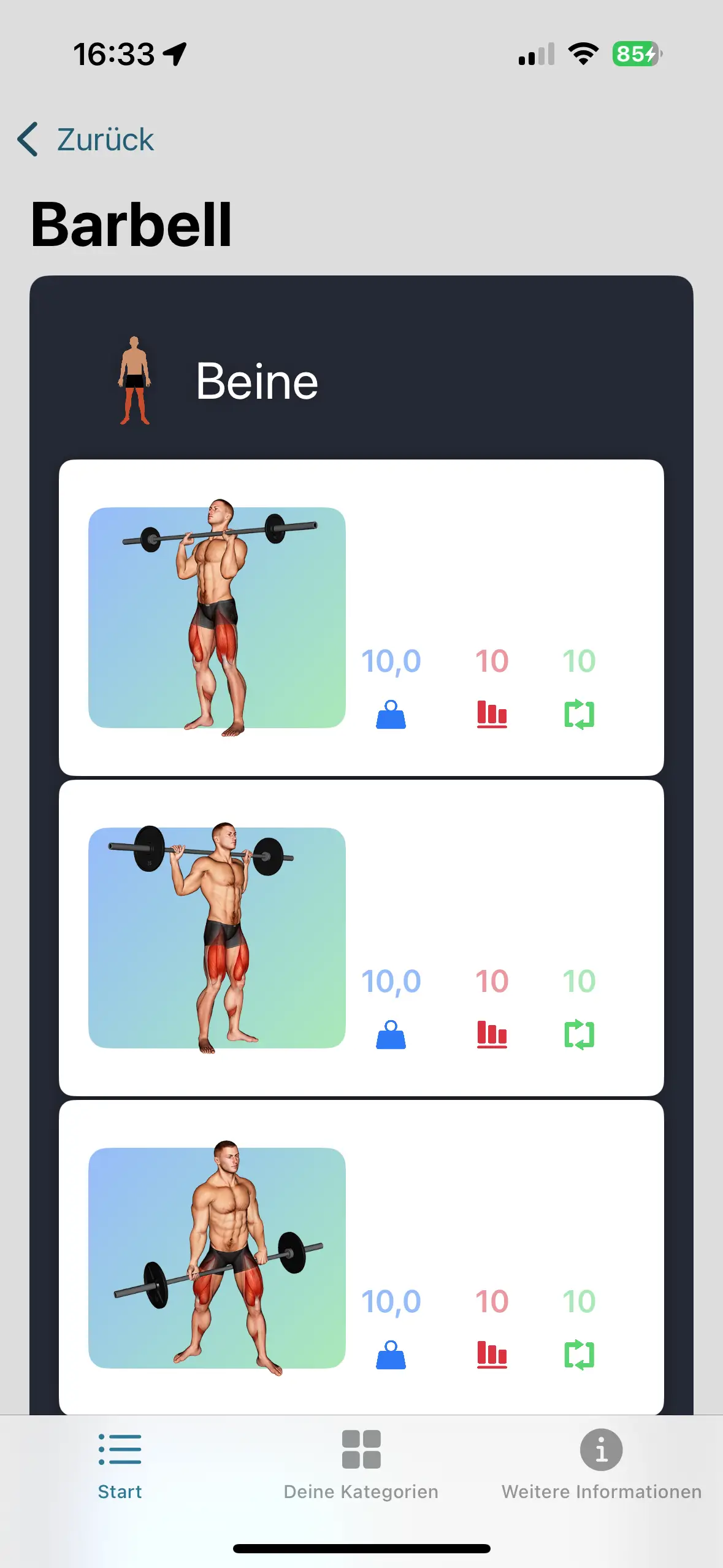
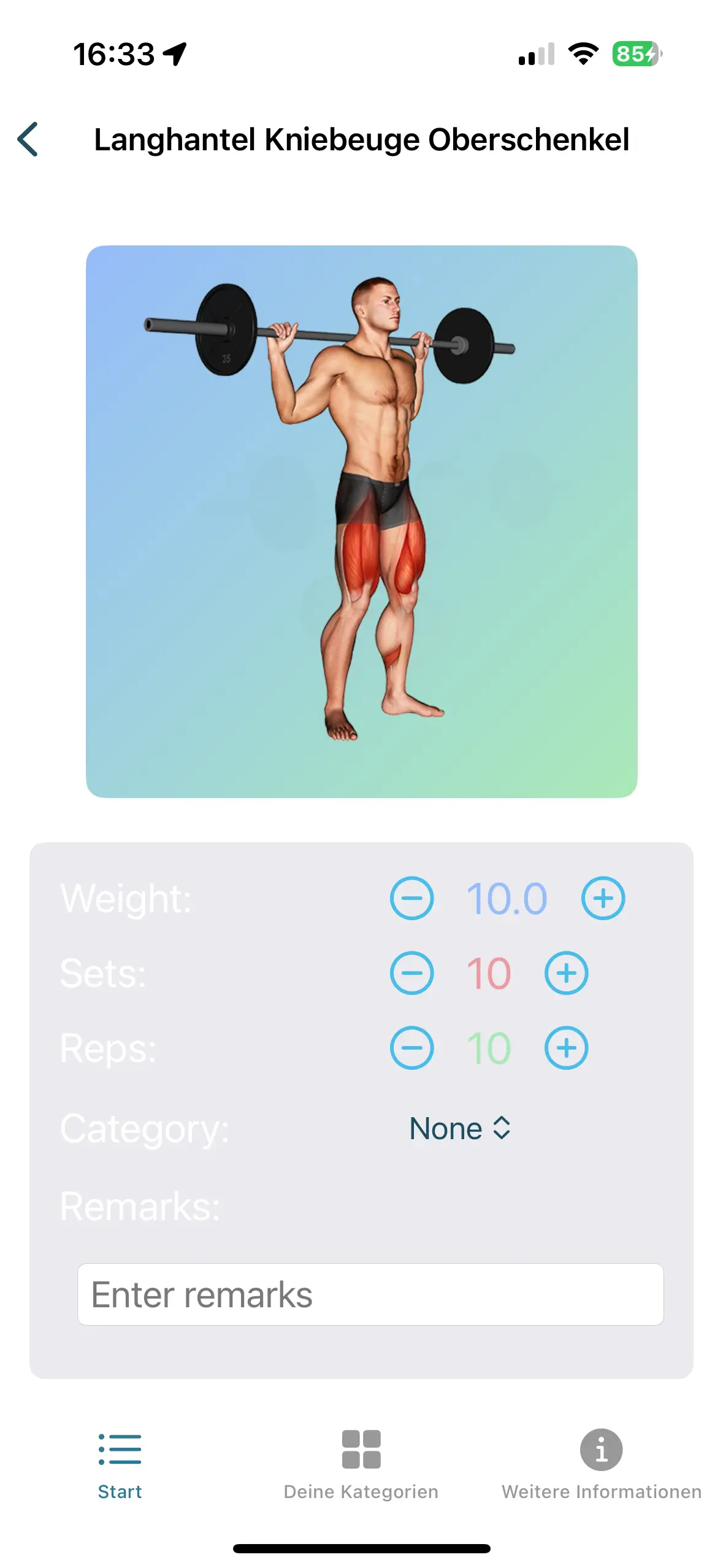
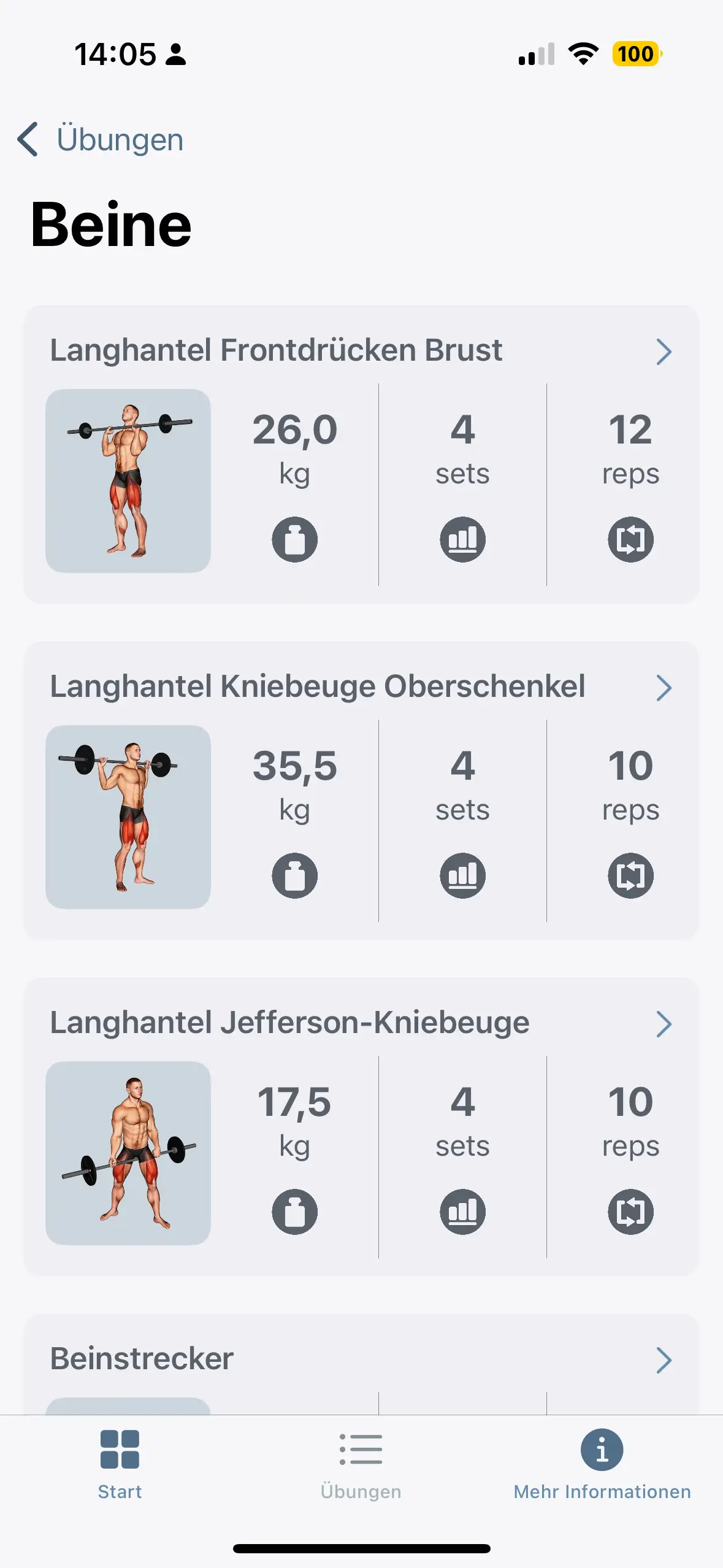
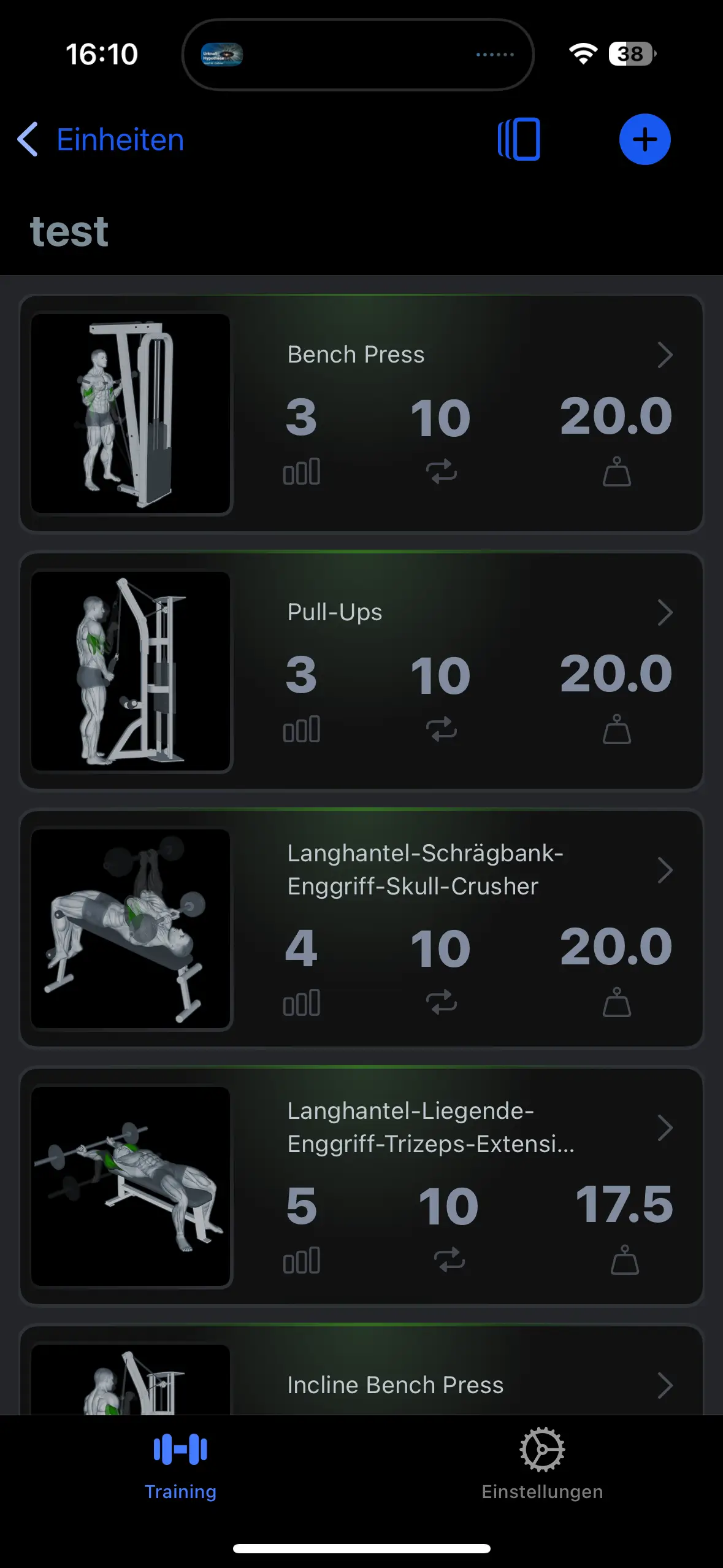
Every other decision flowed from there. The precision slider for weight input — because typing numbers with sweaty fingers on a touchscreen is miserable. The modular workout builder — because supersets, giant sets, and drop sets are how real lifters train, and most apps treat them as edge cases. The muscle map visualization — because knowing which muscle groups you've actually worked this week changes how you program.
And the absence of features was just as intentional as the presence of them. No social feed, because I don't need to see someone else's PR when I'm mid-set. No cloud account required, because my training data is mine. No AI coach, because I've been lifting long enough to know what I need — I just need a tool that lets me execute without friction.
The first version carried a different name: SimplyGym. But the more I looked at what was already out there, the more the name blurred into the crowd. I needed something distinct. I went through a long list of candidates. Eventually I landed on VigiGym — derived from Vigilanz, the German word for vigilance. Watchfulness. Presence. The quality of paying attention to what you're doing, in the moment you're doing it. It can also be read as an acronym: Vision, Intuition, Growth, Intelligence. But the root is vigilance. That's what I wanted the app to embody.
What Surprised Me About Shipping It
I expected to be nervous. I wasn't, particularly. I'd spent months testing every interaction, every edge case, every animation timing. By the time VigiGym went live on the App Store, I had more confidence in it than anything I'd shipped in my professional career — because I was both the developer and the most demanding user.
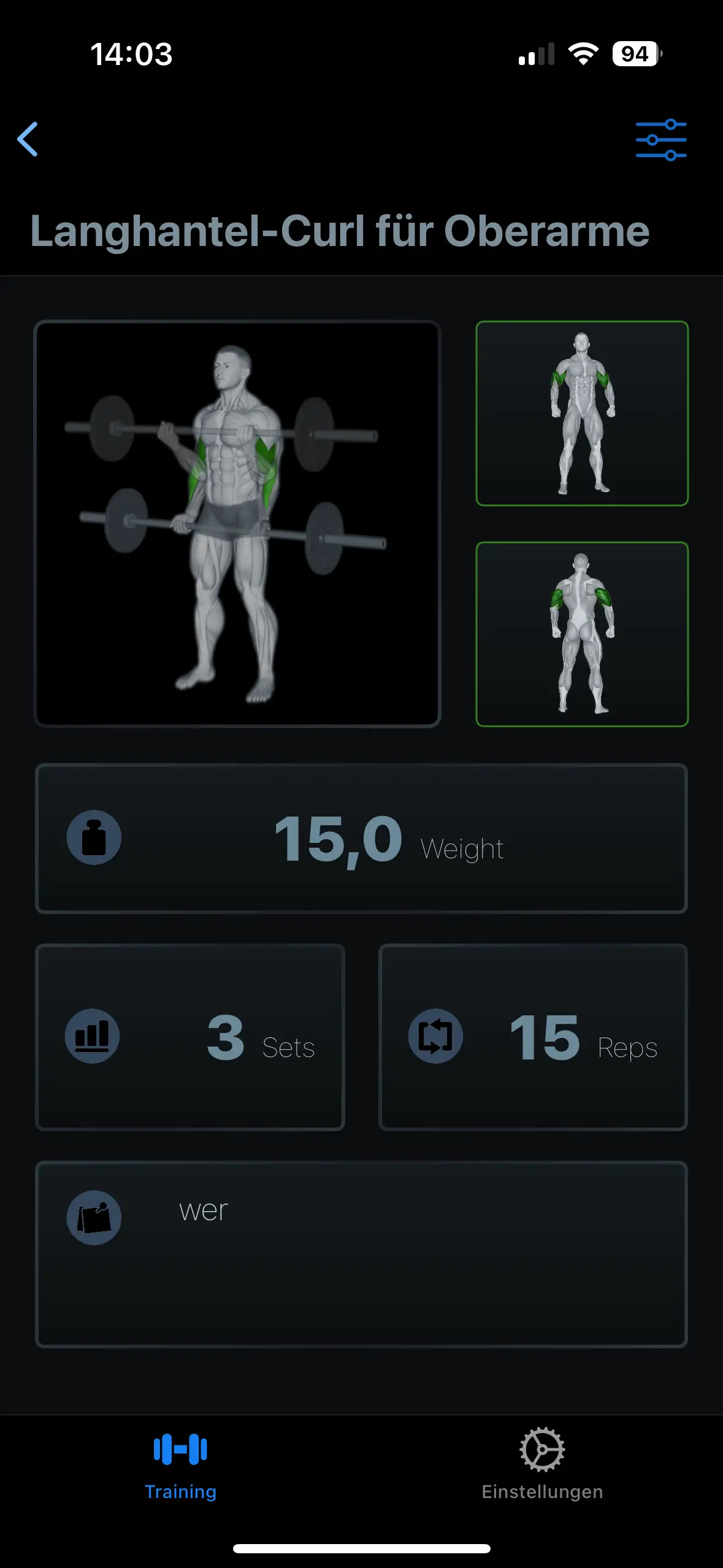
What I didn't expect was the reviews. The very first ones came from Germany, which makes sense — I'm German, my network is here, and the early visibility was local. But within weeks, downloads started appearing from France. The Netherlands. Sweden. People I'd never met, training in gyms I'd never been to, choosing VigiGym over the dozens of alternatives.
Every one of those installs felt significant in a way that client projects never did. This was mine. I'd built it because I needed it. And apparently, I wasn't the only one who felt that way.
And then there was a moment I'll carry for a long time. Someone was so convinced by VigiGym that they took out the first subscription. Not a friend, not a contact — a complete stranger, somewhere out there, who had used the app, liked it, and decided: this is worth something to me. I paused for a moment. And then it didn't stop at one.
"The first time someone in another country opened VigiGym to track their workout, I sat with that for a minute. A kid who grew up on a Commodore 64 in Rheydt had finally shipped something of his own. That feeling never gets old."
What's Next for VigiGym
VigiGym is a living project. The 1.0 was the foundation — the core workout tracking experience, the modular builder, 242 exercises, Apple Watch integration. But there's more coming: progressive overload tracking, deeper analytics, and features that I keep discovering I need every time I walk into the gym.
I follow what I call a Monozukuri approach — a Japanese manufacturing philosophy focused on mastery over the craft of making things. The goal isn't to ship features fast. It's to add each one only when it's exactly right, when it integrates seamlessly, when it makes the whole better without compromising what already works.
If you've been looking for a workout tracker that trusts you to know what you're doing — no hand-holding, no social noise, just precision — that's what VigiGym is. That's what it was always going to be.
I'm not done. But then, neither are you.
Quick Summary
- Built from genuine frustration — No app met the needs of a serious lifter. So Achim Loobes built VigiGym himself.
- 40 years of experience as the foundation — Not SwiftUI syntax, but decades of experience with UI, architecture, and code made the difference.
- Three seconds as the north star — Every design decision in VigiGym followed one question: Can I log a set in under three seconds?
- Omission as design principle — No social feed, no AI coach, no cloud requirement. What isn't there can't distract.
- Vigilance as name and promise — VigiGym stands for awareness: for what you do, in the moment you do it.
Frequently Asked Questions
Why did Achim Loobes build VigiGym?
No available workout app met the needs of a serious lifter. All were too cluttered, too slow, or packed with social features. Achim Loobes wanted a workout tracker that logs a set in under three seconds — without distraction, without friction.
What sets VigiGym apart from other workout apps?
VigiGym deliberately omits a social feed, AI coach, and cloud requirement. Built for serious strength training: fast input via slider and wheel, modular workout builder for supersets, muscle group visualization, and Apple Watch integration. No gamification. No distraction.
How did Achim Loobes learn SwiftUI?
Through Vibe Coding — using AI as a tool to implement ideas without learning a framework from scratch. The foundation was decades of experience with code, UI, and system architecture since 1985. The AI supplied the Apple-specific syntax. Judgment about good design came from experience.
Who is VigiGym for?
VigiGym is built for serious strength training. For lifters who want to track their training data precisely without being distracted by social features, gamification, or unnecessary complexity. The app trusts that the user knows what they are doing.
Ready to level up?
Download Free. Lift Smarter Tonight.


Achim Loobes
Solo developer, lifter, and the person responsible for every pixel of VigiGym. Started coding in 1982. Still training. Still shipping. Based in Mönchengladbach, Germany.